


Forum on Long March held in Lanzhou
On July 18, the "Together on the Long March: From Epic Journey to National Rejuvenation" Long March Spirit Forum was held in Lanzhou, Gansu province. The event was co-hosted by the Center for Asia-Pacific under China International Communications Group (CICG) and the Gansu International Communication Center. Gao Anming, editor-in-chief of CICG, attended the session and delivered an address.
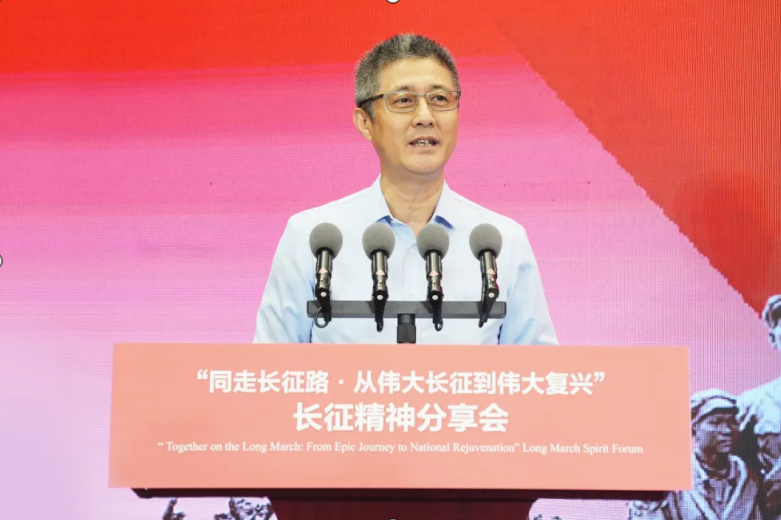
Gao Anming, editor-in-chief of China International Communications Group (CICG), addresses the Long March Spirit Forum in Lanzhou, Gansu province, July 18, 2026. [Photo/CICG]
Gao said Gansu province occupies a pivotal position on the Long March route. It was there that the First, Second, and Fourth Front Armies of the Red Army joined forces, marking a milestone in the history of the Chinese revolution.
Starting from July 13, Chinese and international guests participated in the Gansu leg of the "Together on the Long March" CICG International Communication Project. This journey allowed them to witness China's modern development and gain a deeper appreciation of the historical significance and contemporary relevance of the Long March.
Gao noted that retracing the Long March gave participants the opportunity to understand the source of the success of the Communist Party of China (CPC). He added that to tell Long March stories well is to interpret the Chinese spirit through authentic, multi-dimensional, and comprehensive narratives.
Concluding his speech, Gao said that CICG would continue to uphold fundamental principles and break new ground, and deepen exchanges between China and other countries. He said he hopes that all Chinese and international participants would take this event as an opportunity to observe China with their own eyes, tell China’s stories in their own voices, and bridge China and the world in their own ways, letting the Long March spirit shine in the new era.
Nine Chinese and foreign guest speakers shared their insights into the Long March's history and spirit based on their personal experiences and field observations from retracing the historic trek.
As they looked back on the history of the Long March, David Andrew Bromwich, former national president of the New Zealand China Friendship Society and a recipient of the Chinese Government Friendship Award, noted that clear goals, flexible strategies, and popular support were key to the Red Army's victory.
Tomoyoshi Kimura, a former NHK news anchor, said that the Long March embodied the essence of China's revolution and marked a critical turning point in the history of the CPC. He said that the Red Army relied on the people and fought for the people, fully demonstrating that the victory of China's revolution was deeply rooted in Chinese society and the strength of the people.
Liang Xiaoyuan, executive vice president and secretary-general of the Fourth Field Army Soldiers Descendants Association, shared the story of his father, Lieutenant General Liang Xingchu, surviving the perilous trek across the grasslands during the Long March on barley cakes given by fellow soldiers, which reflected the Red Army's spirit of mutual support and prioritizing collective interests.
The speakers also talked about how the Long March spirit continues to resonate with people in contemporary China.
William N. Brown, a professor at Xiamen University's School of Management and a recipient of the Chinese Government Friendship Award, said that this spirit manifests itself through the unwavering dedication of ordinary people working tirelessly to advance rural revitalization.
Rafael Henrique Zerbetto, a Brazilian expert with CICG Center for Asia-Pacific and a recipient of the Chinese Government Friendship Award, said that Gansu province is translating the Long March spirit of hard work and unity into tangible efforts to overcome challenges. He said that these efforts include the preservation of revolutionary sites, the boom in "red tourism," and specialty industries which have boosted local incomes.
Zhavier Harris, marketing and communications manager of Springfield Urban League, walked the Long March route 10 years ago. He said that revisiting the journey this time deepened his understanding of the Red Army's sacrifice and unity, and let him see firsthand Gansu's progress in historic site protection, infrastructure, and public welfare. The resilience, unity, and hope embodied by the Long March are spiritual assets that transcend national borders, Harris said.
Guests also shared insights on how to share Long March stories across languages and cultures for the world and future generations.
Zeng Jun, an associate research librarian at the Institute of Party History and Literature of the CPC Central Committee, said thanks to the efforts of many international friends, the Long March has become a brilliant calling card for China's public diplomacy and national image.
Elsbeth van Paridon, a Dutch expert with CICG Center for the Americas, said the key to sharing stories of the Long March is to adopt ways that can resonate with the international audience. She recommended combining revolutionary culture with interactive museum experiences and technological innovation to show how the Long March spirit continues to guide the development of China.
Zhang Jiusheng, principal of Wenmiao Street Primary School in Tongwei county, Gansu province, said the school has integrated the Long March spirit into campus life through offering specialized curricula and study tours.
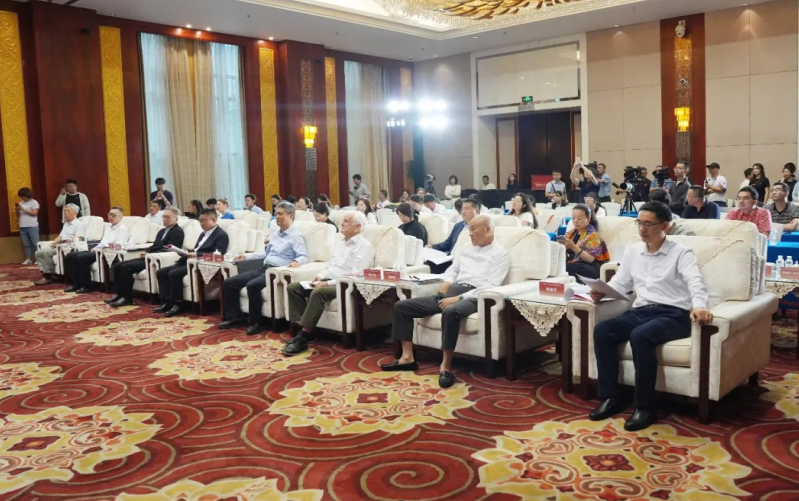
Over 50 Chinese and foreign experts and journalists are present at the Long March Spirit Forum in Lanzhou, Gansu province, July 18, 2026. [Photo/CICG]
Over 50 Chinese and foreign experts and journalists attended the forum.