

CICG executives attend 2026 Global Governance Forum (Xiong'an)
The 2026 Global Governance Forum (Xiong'an) opened in Xiong'an New Area, Hebei province, on Oct. 23, with the theme "Rebuilding Confidence and Cooperation: Reforming and Improving Global Governance in a Transforming World."
President of China International Communications Group (CICG) Chang Bo and CICG Vice President Yu Yunquan attended the opening ceremony, while CICG Editor-in-Chief Gao Anming and Deputy Editor-in-Chief Li Yafang who is also the president of the Academy of Contemporary China and World Studies, took part in roundtable sessions.
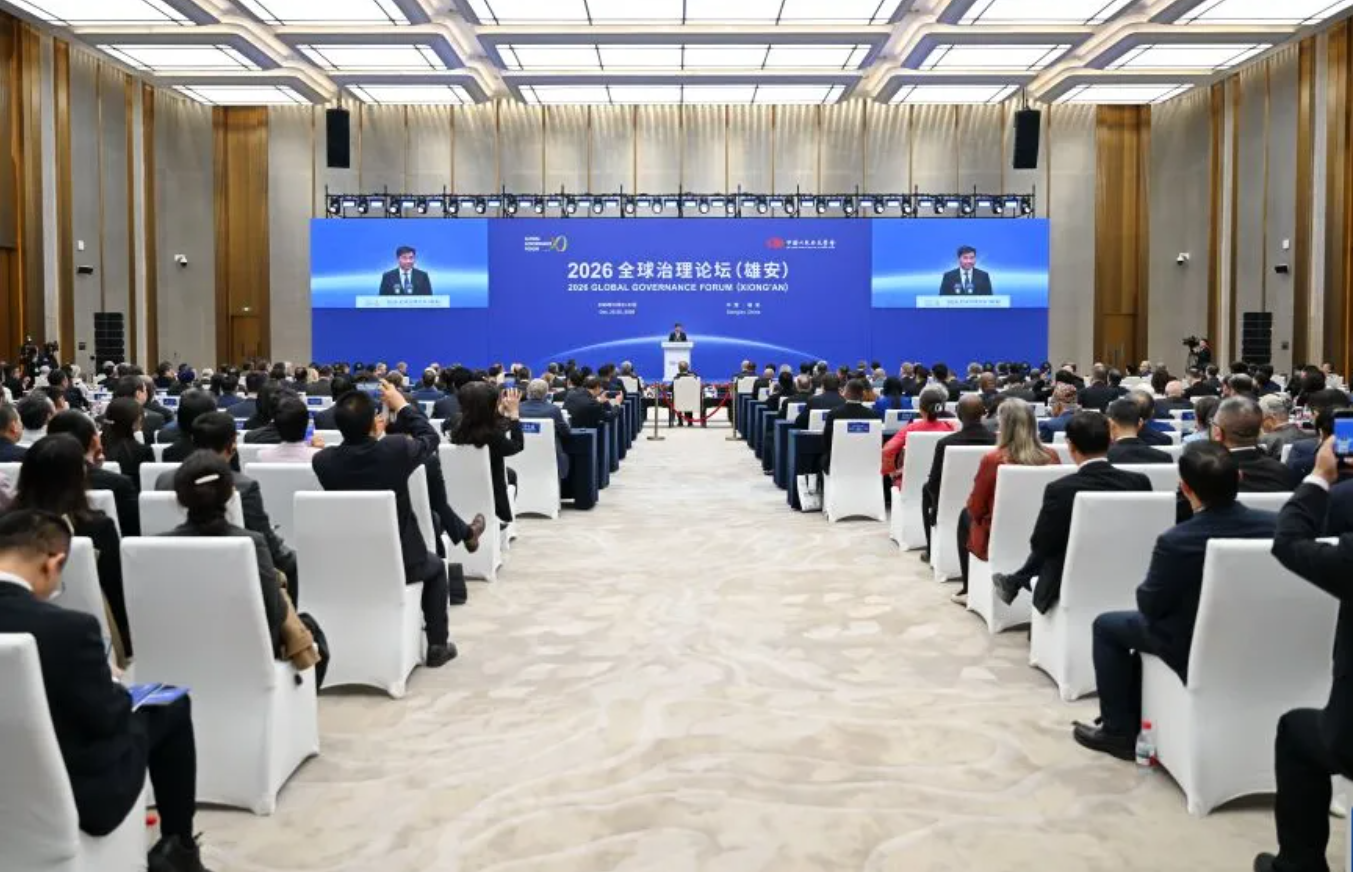
The 2026 Global Governance Forum (Xiong'an) opens in Xiong'an New Area, Hebei province, Oct. 23, 2026. [Photo/CICG]
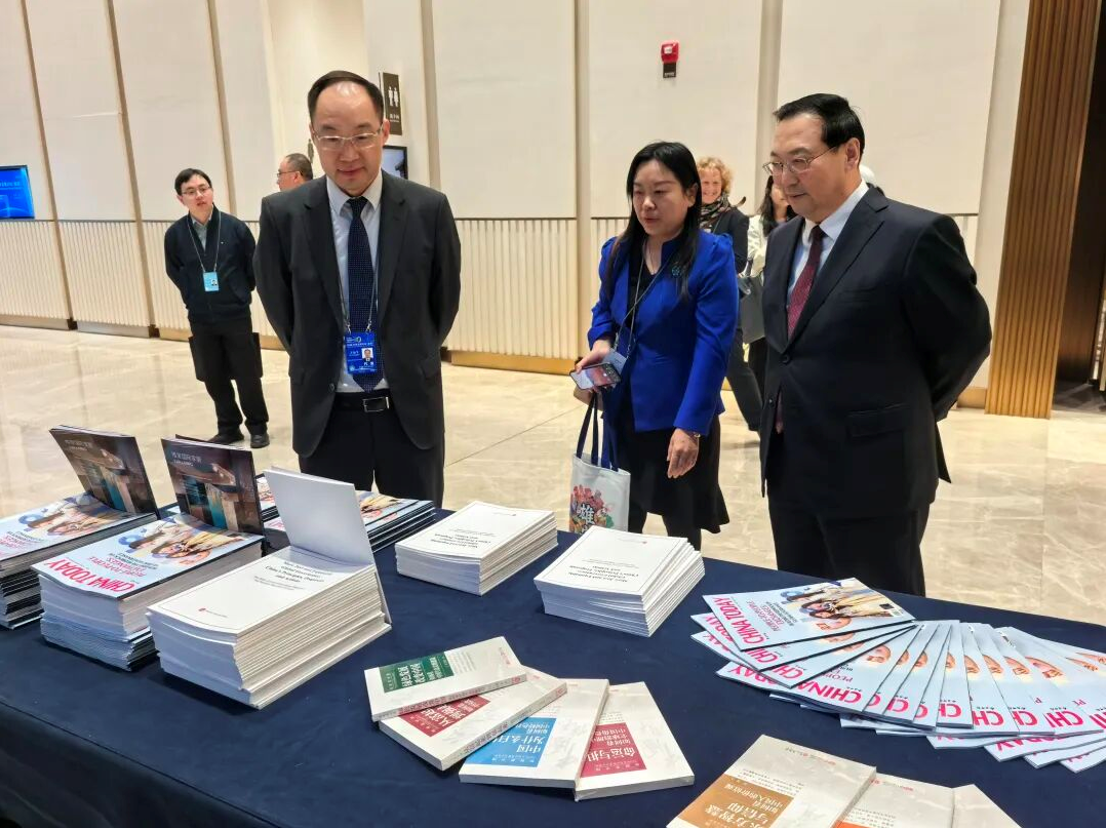
Chang Bo, president of China International Communications Group (CICG), and Yu Yunquan, vice president of CICG, visit the book exhibition at the 2026 Global Governance Forum (Xiong'an), in Xiong'an New Area, Hebei province, Oct. 23, 2026. [Photo/CICG]
CICG organized two roundtable discussions, gathering more than 80 participants from various government agencies, universities, media, think tanks, publishing houses, and non-government institutions.
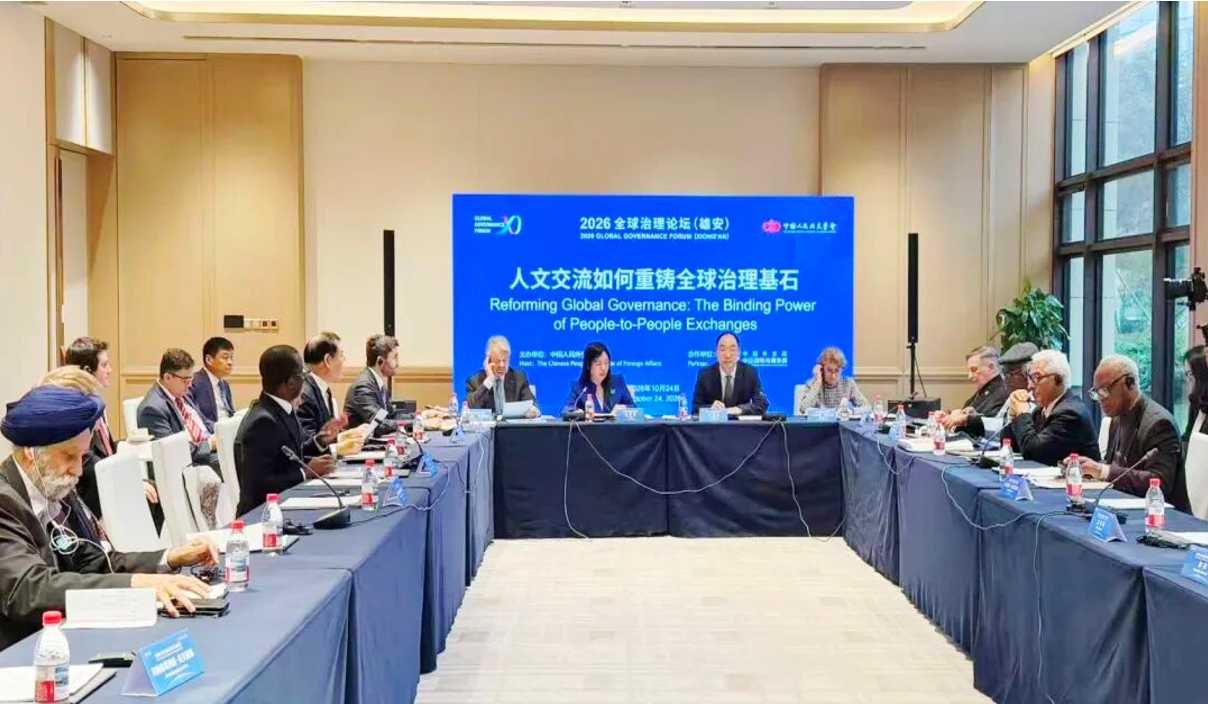
Participants have in-depth discussions covering inter-civilization dialogue, people-to-people exchanges, and governance practices in the first roundtable discussion held by China International Communications Group (CICG) during the 2026 Global Governance Forum (Xiong'an), in Xiong'an New Area, Hebei province, Oct. 24, 2026. [Photo/CICG]
Held on the afternoon of Oct. 24, the first roundtable discussion held by CICG was themed with "Reforming Global Governance: The Binding Power of People-to-People Exchanges."
Yu noted that the Global Governance Initiative has won support from nearly 160 countries and international organizations. People-to-people exchanges are vital to bridging divides and consolidating the social foundation of global governance. Drawing on programs such as the China Today Salon and the Orchid Awards, CICG is committed to facilitating dialogue and mutual learning among civilizations. Looking ahead, it will also put in place an international media dialogue mechanism to build a more objective, diverse, and balanced international narrative, advancing better global governance, he said.
Irina Bokova, former director-general of UNESCO, stressed that priority should be given to implementing the Global Governance Initiative. She called for leveraging a better role of multilateral mechanisms such as the United Nations in dialogue among civilizations, and promoting the alignment of the Global Governance Initiative with the Global Development Initiative, the Global Security Initiative, and the Global Civilization Initiative so as to make dialogue among civilizations an integral part of international cooperation, she said.
Jorge G. Castañeda, former foreign minister of Mexico, said that genuine dialogue embraces listening and debate. Candid communication is especially vital to dispel prejudices when disagreements emerge. Countries must rise above short-term political confrontation and deepen dialogue and people-to-people exchanges on the basis of respecting diversity.
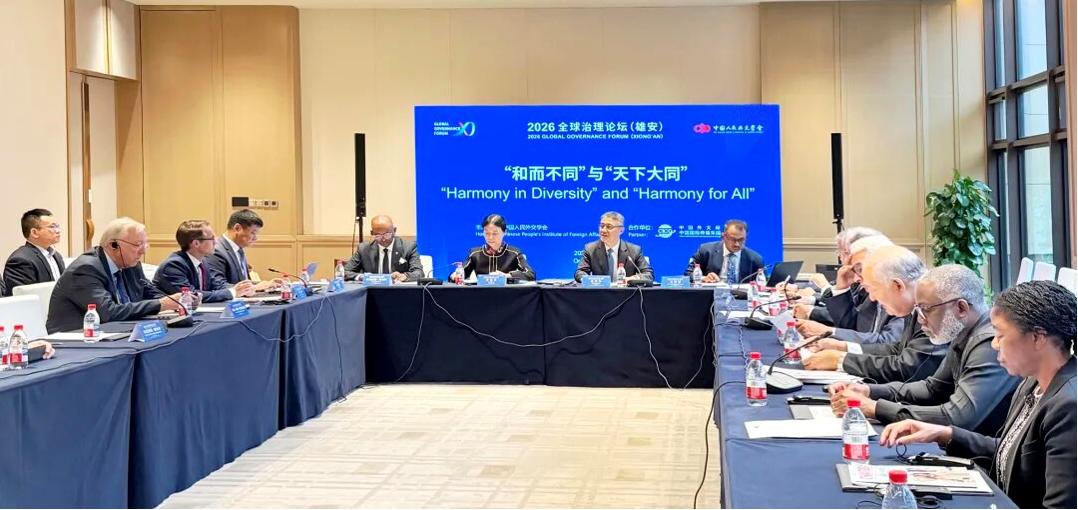
Participants explore how to draw on traditional wisdom to advance equal dialogue and better global governance in the second roundtable discussion held by China International Communications Group (CICG) during the 2026 Global Governance Forum (Xiong'an), in Xiong'an New Area, Hebei province, Oct. 25, 2026. [Photo/CICG]
On the morning of Oct. 25, the second roundtable discussion centering on "Harmony in Diversity" and "Harmony for All" was held.
Li noted that exchanges and mutual learning among civilizations are vital to advancing human progress, and that the concepts of "Harmony in Diversity" and "Harmony for All" in Chinese civilization can serve as important cultural reference for reforming global governance. She said implementing the Global Governance Initiative calls for drawing on traditional Chinese wisdom to address global governance challenges, aligning practical cooperation with shared values, and turning the insights of Chinese civilization into a shared intellectual resource for improving global governance.
Kostas Gouliamos, former rector of the European University Cyprus, noted that every civilization contributes unique insights to human development. Dialogue among civilizations helps people reflect on established perceptions and foster progressive models of coexistence. Such inclusive exchanges and mutual learning turn differences into a source of mutual enrichment.
Elias Wondimu, an Ethiopian-born journalist and founder and CEO of Tsehai Publishers, said that Africa should not only have the right to tell its own stories, but also acquire the capacity to research, preserve, and disseminate its narratives. He called for advancing reciprocal China-Africa translation, joint publishing, and institutional building in areas such as editor training, so as to put the concepts of "Harmony in Diversity" and "Harmony for All" into practice.
Gao concluded that differences are not barriers to dialogue, but reasons for it. The key to exchanges and mutual learning among civilizations lies in enabling every civilization to tell its own stories as well as research and preserve its own knowledge. He said CICG will continue to build platforms for people-to-people exchanges, promote equal dialogue and mutual learning among civilizations, and consolidate the humanistic foundation for global governance.
The 2026 Global Governance Forum (Xiong'an) was hosted by the Chinese People's Institute of Foreign Affairs. Nearly 400 representatives of political, strategic, academic, business, media, and youth leadership circles from more than 90 countries as well as international and regional organizations attended the opening ceremony.