


Translators Association of China releases industry development reports
The Translators Association of China (TAC) released reports on the development of Chinese and global translation industry during its annual conference on Saturday.
The conference, under the theme "Breaking Boundaries: The Infinite Possibilities of Translation in the Era of Digital Intelligence," was held from April 25 to 26 in Wuhan, central China's Hubei province.
According to the report on the development of China's translation industry, the industry generated a total output of about 70.12 billion yuan (US$10.26 billion) in 2025, with around 6.87 million translation professionals, including 1.14 million full-time translators.
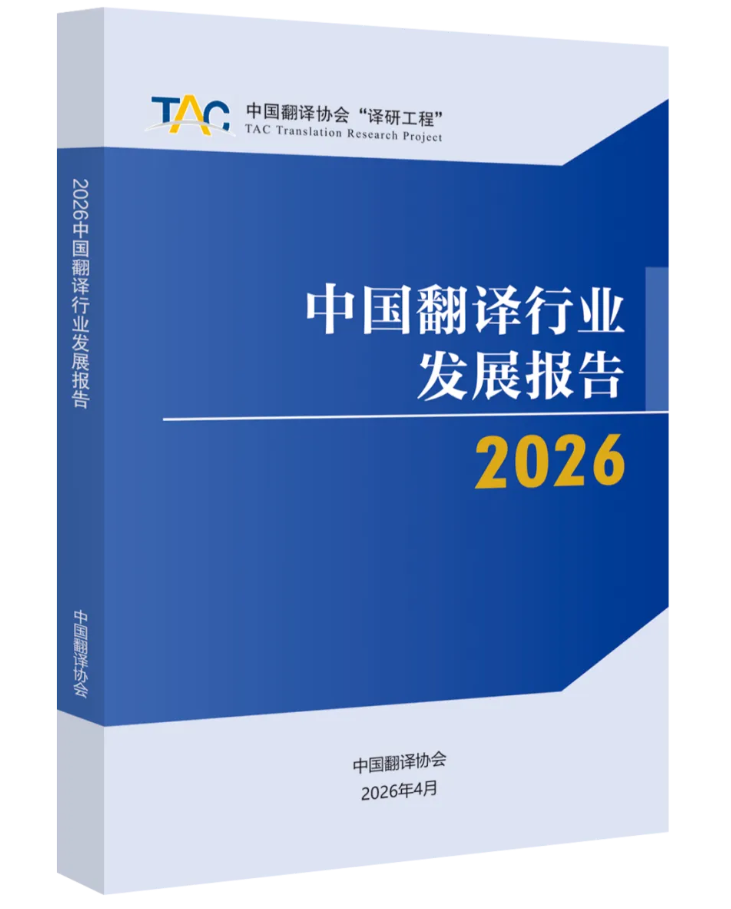
A report on the development of China's translation industry is released during the TAC Annual Conference 2026 in Wuhan, Hubei province, April 25, 2026. [Photo/CICG]
In the translation industry, both providers and users of translation services have shown a marked increase in attention to modern translation tools and technologies, with information and communication technologies and AI-based translation training set to be key areas of development in the next five years, the report says.
As AI-powered translation becomes widely used, the application of translation technologies has entered a phase of deep integration, and human-machine collaborative translation has become an industry consensus, according to the report.
The report on the development of global translation industry suggested stabilized growth and notable regional divergence of the industry, with Asian and European markets showing strong growth momentum.
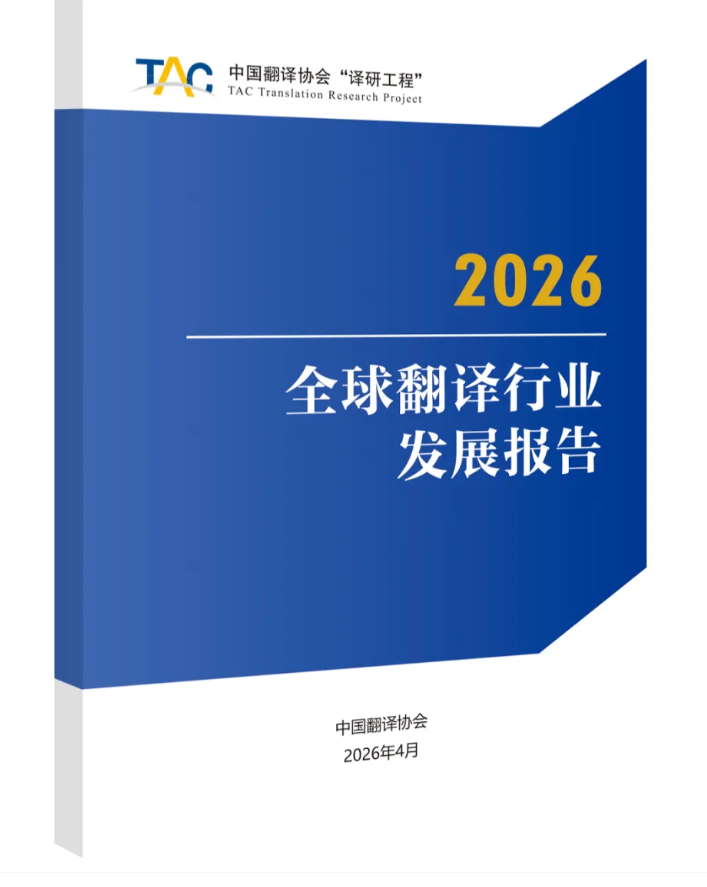
A report on the development of global translation industry is released during the TAC Annual Conference 2026 in Wuhan, Hubei province, April 25, 2026. [Photo/CICG]
The report also says that upgrades in AI translation and large language model technologies have attracted growing attention from both the industry and capital markets, but there are still shortcomings in areas such as language coverage and accuracy, as well as emotional understanding and expression.
AI-related capabilities and domain expertise have become essential skills, while human-machine collaboration has emerged as the dominant working model in the industry, the report notes.