


Translators Association of China annual conference 2026 held in Wuhan
The 2026 annual conference of the Translators Association of China (TAC) was held from April 25 to 26 in Wuhan, central China's Hubei province, bringing together more than 900 representatives from government agencies, universities, research institutes, and the translation industry.
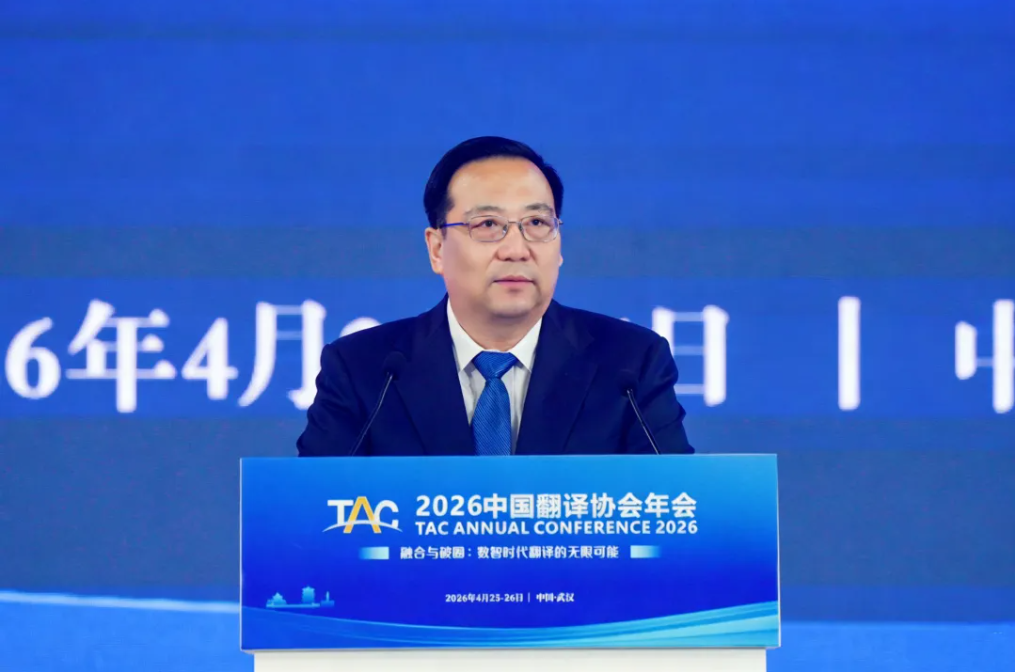
Chang Bo, president of China International Communications Group (CICG), speaks at the opening ceremony of the TAC Annual Conference 2026 in Wuhan, central China's Hubei province, April 25, 2026. [Photo/CICG]
Chang Bo, president of China International Communications Group (CICG), attended the opening ceremony and delivered a speech.
Chang said China has placed growing emphasis on international communication and translation in recent years, with national policy priorities calling for a more effective global communication system and deeper cultural exchange. As global interactions expand, he said, translation is becoming increasingly important. Chang called for high-quality translation to better foster cultural exchanges, greater use of digital and intelligent technologies to upgrade the industry while preserving its humanistic depth, and stronger collaboration to build a more coordinated industry ecosystem.
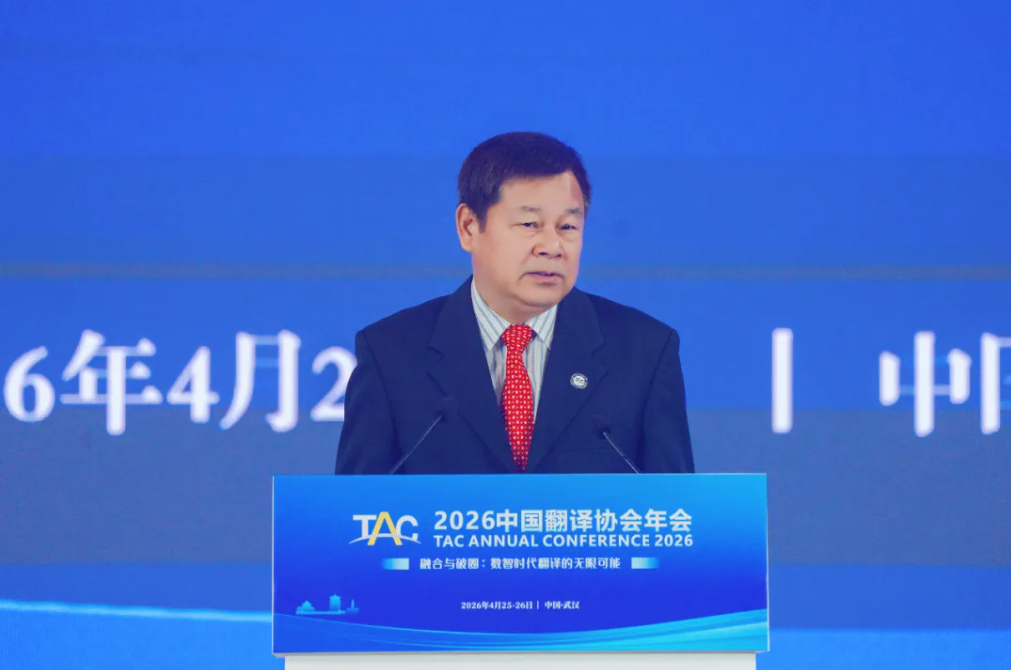
Du Zhanyuan, a member of the Standing Committee of the 14th National Committee of the Chinese People's Political Consultative Conference and president of the Translators Association of China (TAC), speaks at the opening ceremony of the TAC Annual Conference 2026 in Wuhan, central China's Hubei province, April 25, 2026. [Photo/CICG]
Du Zhanyuan, a member of the Standing Committee of the 14th National Committee of the Chinese People's Political Consultative Conference and president of the TAC, noted in his speech that the conference came at a key moment for advancing the industry. He called for improving the global expression of Chinese narratives, advancing the Four Pillars of Translation program covering talent development, translation and publication, research, and training, and strengthening coordination across the sector to support national priorities.
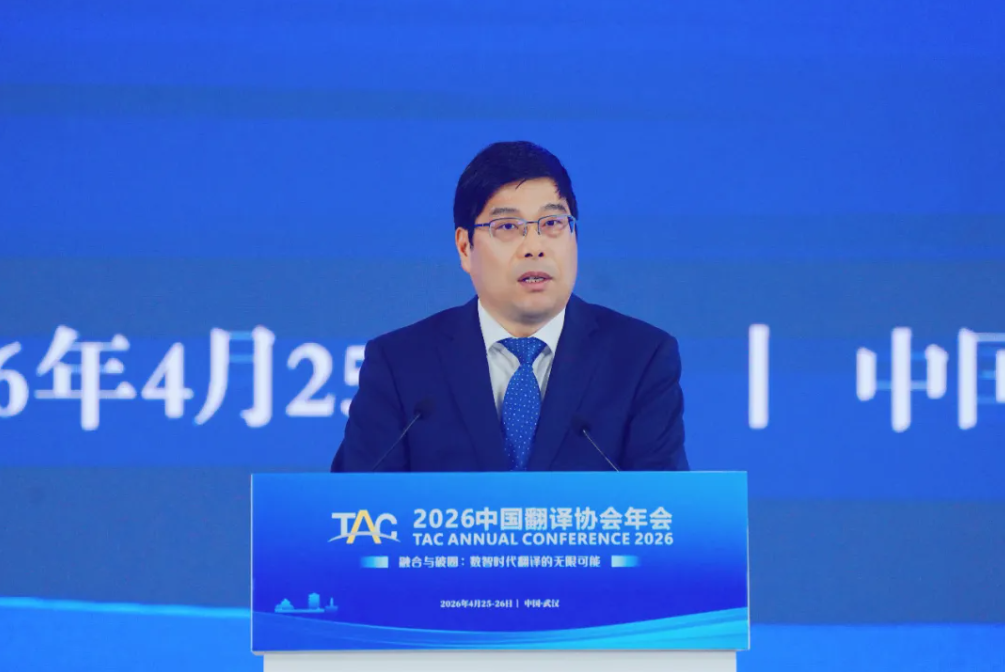
Ju Zhaohui, a member of the Standing Committee of the Communist Party of China (CPC) Hubei Provincial Committee and director general of the Publicity Department of the CPC Hubei Provincial Committee, speaks at the opening ceremony of the TAC Annual Conference 2026 in Wuhan, central China's Hubei province, April 25, 2026. [Photo/CICG]
Ju Zhaohui, a member of the Standing Committee of the Communist Party of China (CPC) Hubei Provincial Committee and director general of the Publicity Department of the CPC Hubei Provincial Committee, said in his speech that translation plays a vital role in bridging cultures and supporting China's external engagement. He noted that the conference reflected the industry's efforts to adapt to a new wave of technological change. Hubei, he said, is leveraging its cultural resources to build an integrated model combining research, translation, and communication, and will further promote the integration of translation and artificial intelligence (AI) to better serve national and regional development.
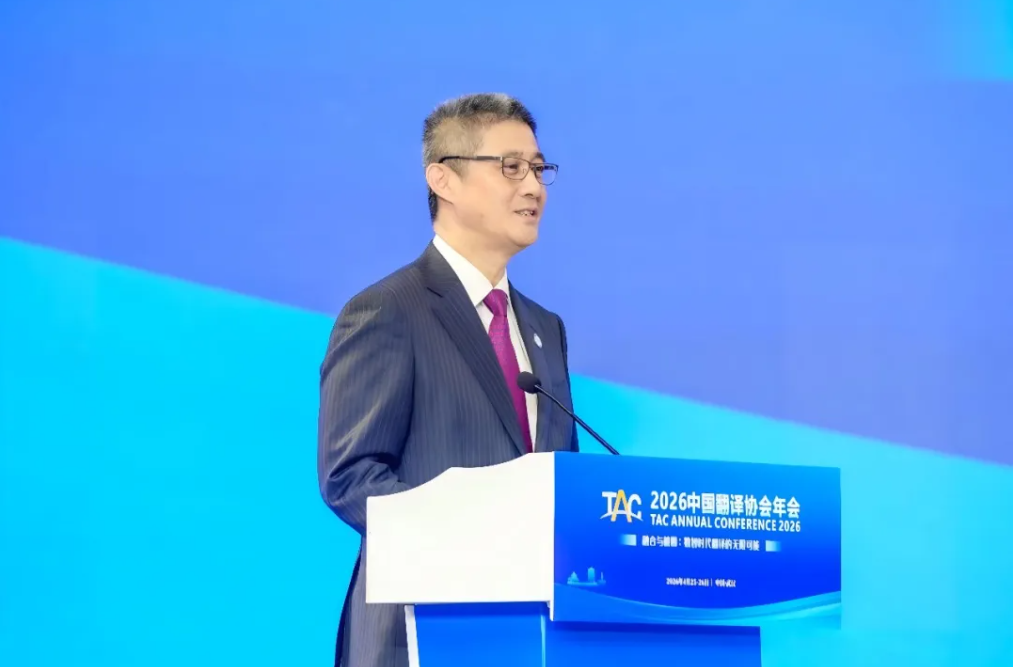
Gao Anming, editor-in-chief of China International Communications Group (CICG) and executive vice president and secretary-general of the Translators Association of China (TAC), presides over the opening ceremony of the TAC Annual Conference 2026 in Wuhan, central China's Hubei province, April 25, 2026. [Photo/CICG]
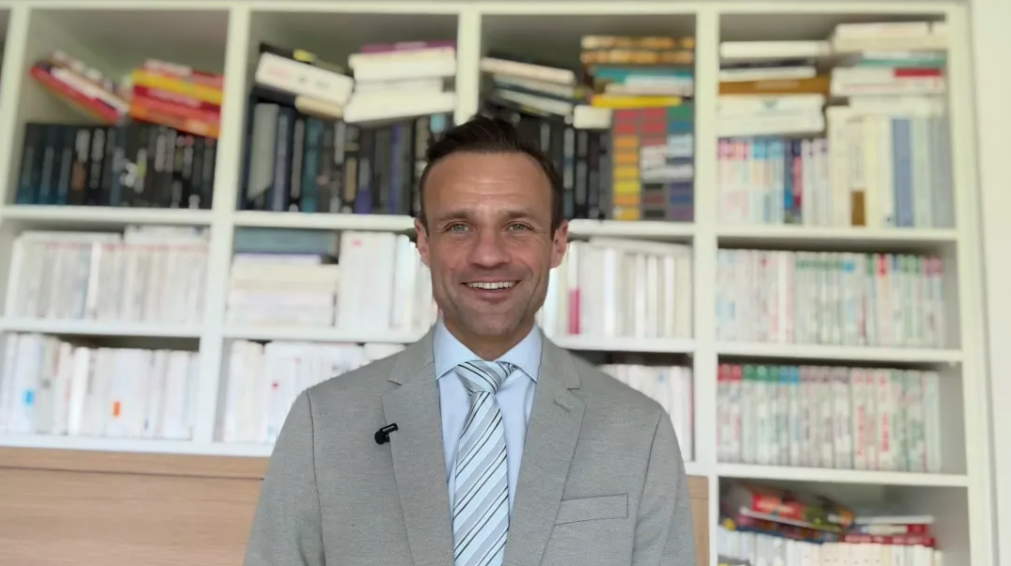
Guillaume Deneufbourg, president of the International Federation of Translators, delivers a speech via video link at the opening ceremony of the TAC Annual Conference 2026 in Wuhan, central China's Hubei province, April 25, 2026. [Photo/CICG]
Guillaume Deneufbourg, president of the International Federation of Translators, delivered remarks by video. He said that China's translation sector plays an important role in Asia and globally. He said advances in digital technology and AI are driving profound changes in the industry and increasing demand for highly skilled language professionals. While technology brings opportunities, he noted, it also poses risks to communication, yet translation, founded on accuracy, responsibility, and trust, maintains its core mission in cross-cultural communication. He added that the International Federation of Translators will continue to deepen cooperation with China's translation community.
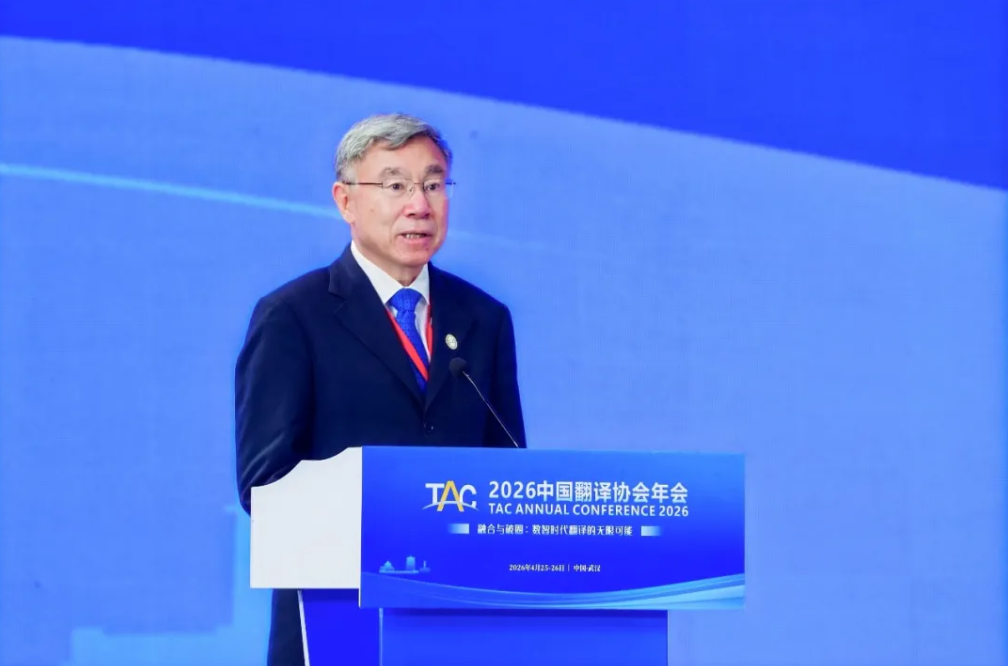
Huang Youyi, former vice president and former editor-in-chief of China International Communications Group (CICG) and executive vice president of the Translators Association of China (TAC), launches the 2026 Four Pillars of Translation program at the opening ceremony of the TAC Annual Conference 2026 in Wuhan, central China's Hubei province, April 25, 2026. [Photo/CICG]
During the opening ceremony, the TAC launched its 2026 initiatives under a four-pillar program covering talent development, translation and publication, research, and training. First introduced in 2025, the program has made initial progress in strengthening industry capacity and expanding international outreach.
New projects were also unveiled, including multilingual translation and publication initiatives focusing on themes such as Chinese culture, rule of law, and ecological protection. Partnerships were announced with local governments, media organizations, and universities to expand international communication efforts.
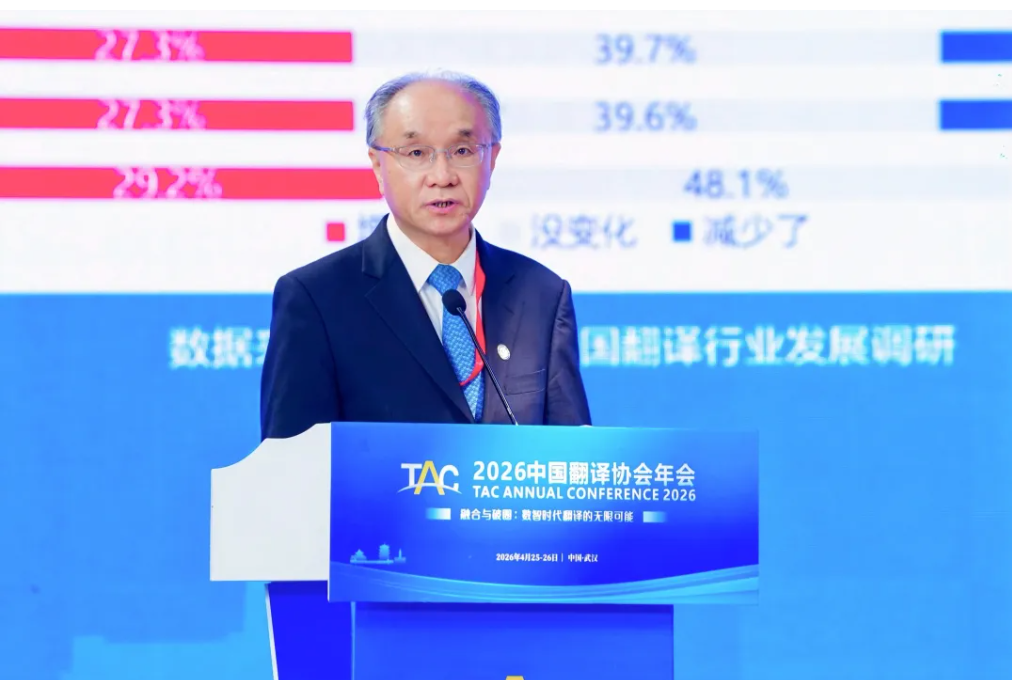
Wang Gangyi, former vice president of China International Communications Group (CICG) and executive vice president of the Translators Association of China (TAC), introduces industry reports at the opening ceremony of the TAC Annual Conference 2026 in Wuhan, central China's Hubei province, April 25, 2026. [Photo/CICG]
An initiative on the translation of public signs in everyday use was launched to standardize multilingual public information and support tourism and city branding. Industry reports on China's translation sector, the global translation market, and AI-driven translation trends were also released.
The two-day event also featured nearly 30 thematic sessions on topics including human-machine collaboration, ethics in AI-powered translation, and international communication through film and television.
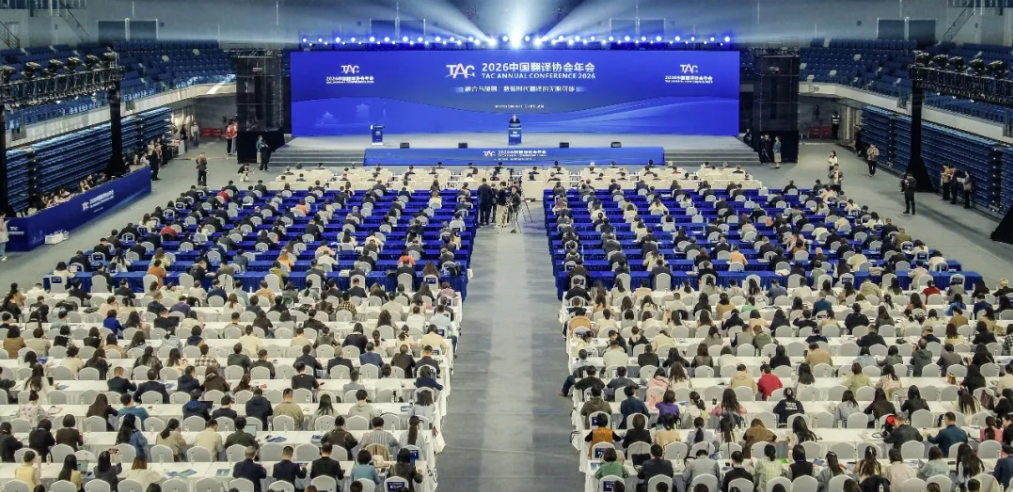
The 2026 annual conference of the Translators Association of China (TAC) is held in Wuhan, central China's Hubei province, April 25, 2026. [Photo/CICG]
Founded in 1982, the TAC is the country's only national-level organization for the profession. This year's conference, themed "Breaking Boundaries: The Infinite Possibilities of Translation in the Era of Digital Intelligence," was guided by CICG and Hubei provincial authorities and jointly hosted by the TAC, Wuhan University, and CICG Academy of Translation and Interpretation.