


Intangible Cultural Heritage Experience Event Successfully Held in Sanlitun
On March 20, 2026, a vibrant cross-cultural feast of intangible cultural heritage took place at the China Today Intangible Cultural Heritage Pavilion in Sanlitun, Beijing, under the theme "Vernal Equinox Keeps Its Tryst – Heritage Engages the World." The event coincided with the Spring Equinox when "day and night are equal in length, cold and heat are balanced, and all things grow as hope begins to flourish." More than 50 guests, including foreign participants, Chinese Intangible Cultural Heritage (ICH) inheritors, artists, cultural scholars, researchers, and media professionals, gathered to enjoy cross-cultural ICH experiences and exchange through the creation of Chinese ICH products, project exhibitions and performances, and hands-on experiences. Zhao Lijun, director of the China International Communications Group (CICG) Center for Europe and Africa (China Today Magazine), was in attendance, with He An, secretary-general of the Horizon Insights Center, and Jasmine Ramadan, an Arabic-language expert from the Center for Europe and Africa, co-hosting.
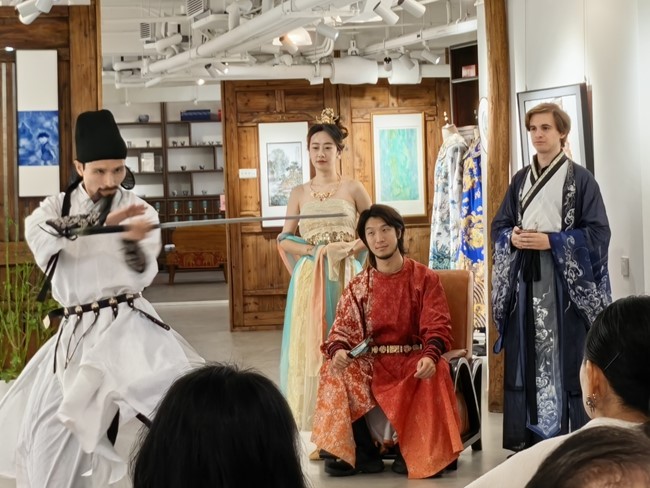
Performers impress the audience with a rendition of Night Banquet in Tang Dynasty Palace.
Night Banquet in Tang Dynasty Palace: An Artistic Presentation of Ancient Charm and Modern Flair
The event began with a captivating performance of Night Banquet in Tang Dynasty Palace, which took the audience into a classical artistic realm. Dressed in Tang Dynasty costumes, dancers recreated the lively banquet scenes of the imperial court at the height of the Tang era with their graceful movements, immersing the audience in the splendor of a flourishing civilization from over a millennium ago. The performance not only showcased the magnificence of ancient Chinese court culture but also set a rich cultural tone for the ICH presentations that followed.
Subsequently, Liao Yingjia, deputy secretary-general of the Traditional Culture Committee of the Chinese Culture Promotion Society, presented the evolution of traditional Chinese clothing and its cultural meanings to Chinese and foreign audiences through a series of historical images.
The Rich Aroma of Tea: Techniques of a Buyi Fairy Tea Inheritor
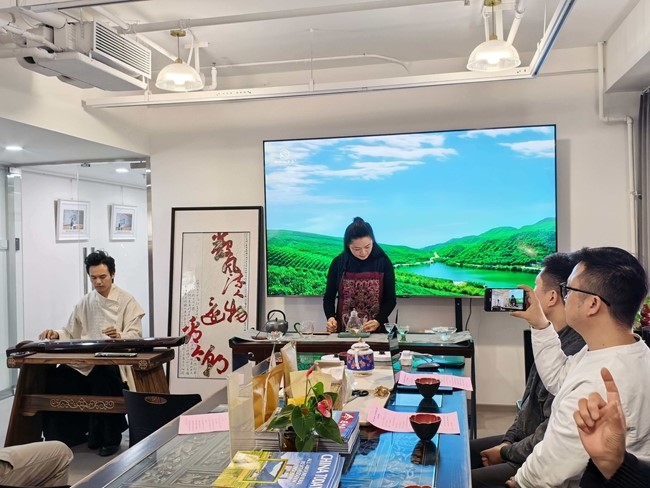
Luo Ziqing introduces Buyi Fairy Tea.
Luo Ziqing, an inheritor of Buyi tea culture and founder of Buyi Fairy Tea from southwest China's Guizhou Province, demonstrated the tea-brewing techniques of Buyi Fairy Tea on site, inviting guests to sample the tea to an appreciative audience of Chinese and foreign guests.
Luo has, for many years, dedicated herself to exploring and reviving traditional handmade tea processing techniques and has built ecological tea gardens in the mountains of Guizhou into an intangible cultural heritage base that integrates cultivation, production, and immersive experiences. Luo noted that tea is not just a beverage, but a philosophy of life, hoping that the world can appreciate the poetry and craftsmanship embodied in China's culture through tea.
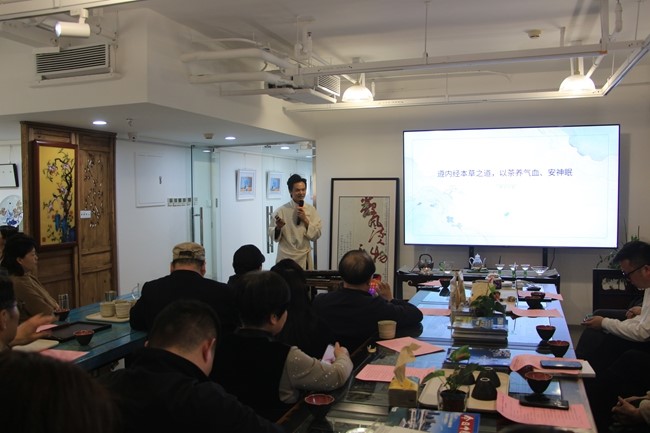
Meng Xi shares the inheritance of traditional Chinese medicine as intangible cultural heritage.
The Guqin and Traditional Chinese Medicine: Wisdom of Life in Intangible Cultural Heritage
Meng Xi, the sixth-generation inheritor of Yunbaotang traditional Chinese medicine (TCM), appeared in traditional attire and played the guqin, traditional Chinese zither, while speaking, skillfully integrating the instrument's five tones with the TCM theory of the five internal organs and sharing the ancient wisdom that "music is a good medicine."
The audience became immersed in the lingering, melodious sound of the guqin and Meng explained that it was not only a musical instrument, but also a means of self-cultivation and inner refinement. This resonates deeply with the TCM concept of "preventive treatment of disease." Together, they embody the pursuit of harmony in life in Chinese culture.
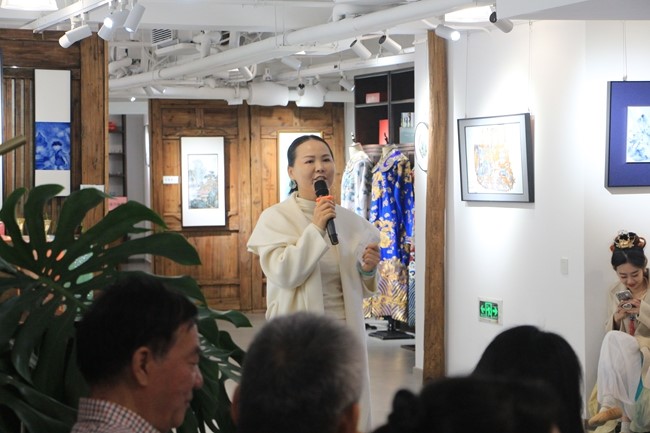
Hu Xin explains innovations in mortise-and-tenon furniture.
Craftsmanship in Furniture: Contemporary Expression of Intangible Cultural Heritage
Hu Xin, founder and chief designer of Weijia Home, shared her explorations and practices in integrating traditional ICH techniques into modern home design under the theme of "Inheritance and Innovation of Chinese Intangible Cultural Heritage Furniture." Elements such as the mortise and tenon structure, carving techniques, and traditional lacquer finishing found in classical Chinese furniture are all valuable forms of ICH. Hu and her team have conducted in-depth research into the aesthetics of lines and the minimalist spirit of classical furniture, distilling and reconfiguring these classical elements while adapting them to modern lifestyles. The result is home furnishings that retain an oriental charm while aligning with contemporary aesthetics.
At the event, Hu showcased a modern tea table crafted using traditional mortise and tenon structure, drawing much interest from her audience.
Ceramic Splendor: Masters Jointly Interpreting the Timeless Art of Clay
During the ceramic-themed session of the event, several ceramic artists appeared on stage together, the last demonstration of the day. Ceramics is an art form of fire and earth, while painting and calligraphy infuse it with soul. Ma Shuoshan, a first-class artist at the National Museum of China and a renowned painter, was the first to take the stage. While sharing his artistic journey of integrating traditional Chinese painting and calligraphy into ceramic art, he gave a live painting demonstration, creating a ceramic artwork on a porcelain plate with fluid, expressive brushstrokes that drew spontaneous applause.
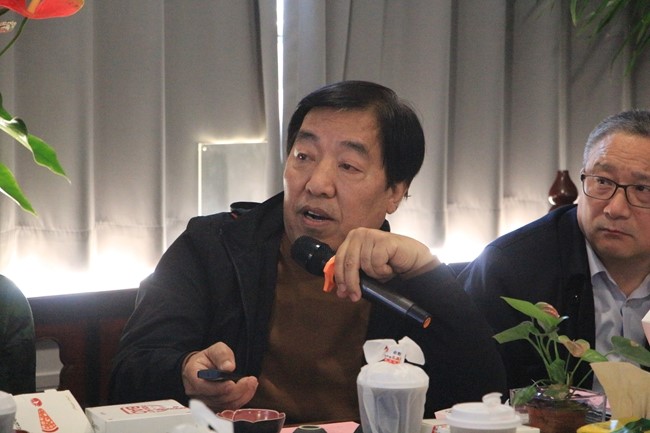
Ma Shuoshan talks about the inheritance of porcelain painting.
Gong Yuhui, a master of intangible cultural heritage in ceramics, brought several of his works, demonstrating through them the seamless combination of traditional craftsmanship and modern aesthetics. At the same time, he shared his expertise on the millennia-long development of Chinese ceramics from Yangshao painted pottery to Jingdezhen blue-and-white porcelain, analyzing the unique position of Chinese ceramics in the history of world civilization.
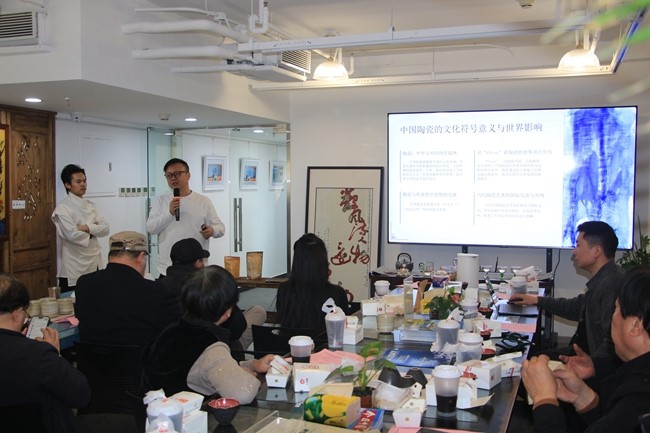
Gong Yuhui outlines the millennia-old history of ceramics.
Deng Li, another master of ICH in ceramics, has participated in numerous overseas exchanges. He felt that different civilizations have their own distinctive interpretations of ceramics. He invited two young inheritors to join him in painting a porcelain vase on site, showcasing both the inheritance and innovation of the craft. He believed that Chinese ceramics should remain rooted in tradition while actively absorbing external elements, allowing this ancient art to be resuscitated in the modern era.
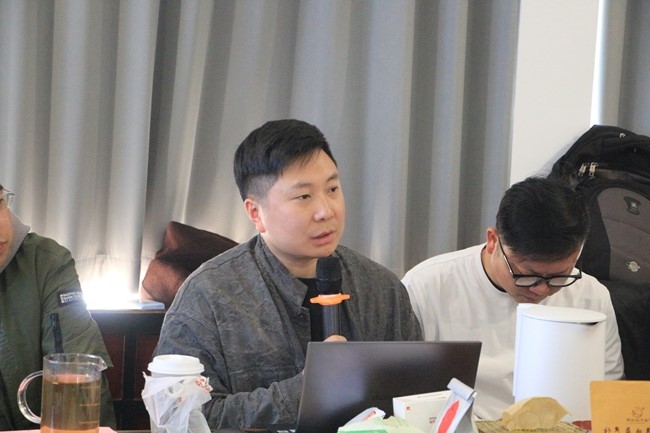
Deng Li shares reflections on Chinese and foreign ceramic techniques.
Co-hosted by the CICG Center for Europe and Africa and Horizon Insights Center, the event not only showcased the diversity and vitality of Chinese ICH to Chinese and foreign audiences but also built a warm and meaningful platform for cultural exchanges between China and other countries. Held on the day of the Spring Equinox, ICH was being disseminated to a wider audience, said Li Wuzhou, deputy director of the CICG Center for Europe and Africa (China Today Magazine), said in his opening remarks, adding that ICH is a shared spiritual treasure of humanity. China possesses abundant ICH resources, and the CICG Center for Europe and Africa has long been committed to introducing China's ICH stories to the world through multilingual and multi-platform communication. Li said the event brought together a number of ICH inheritors and artists to help more people experience the warmth and charm of Chinese ICH through face-to-face exchanges.
Many foreign participants expressed their appreciation for gaining a deeper understanding of Chinese ICH, and looked forward to more such opportunities for experience and exchange in the future, so as to promote two-way cultural exchanges between China and the world.
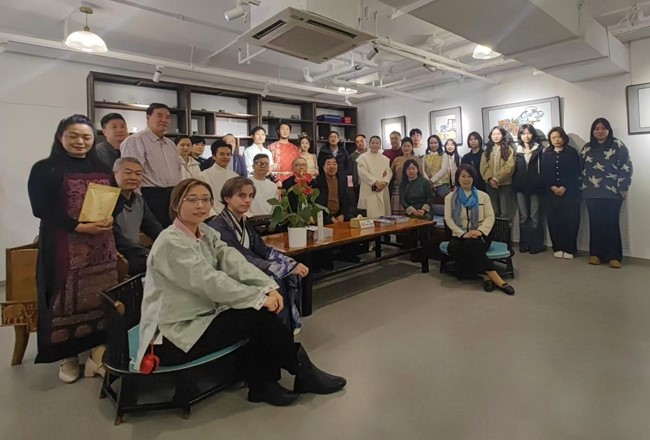
Event participants pose for a group photo.
The China Today Intangible Cultural Heritage Pavilion and the China Today Salon are flagship cultural exchange initiatives launched by the CICG Center for Europe and Africa, drawing on more than 70 years of international communication experience accumulated by China Today magazine. As a key project under the "Qianfan Going Global" program, jointly promoted by six national ministries and commissions, the China Today Salon has already been established in cities including Cairo, Madrid, Jingdezhen, Macao, Shenyang, and Beijing, forming a global network of China-themed exhibition and communication platforms. The China Today Intangible Cultural Heritage Pavilion is dedicated to promoting Chinese ICH to international audiences and supporting Chinese culture in going global. It has been successfully presented for two consecutive years at the Abu Dhabi International Book Fair in the United Arab Emirates and has organized a "China's Intangible Cultural Heritage World Tour" Ceramic Art Exhibition at home and abroad on several occasions.
The two initiatives function not only as static exhibition spaces but also as innovative international communication platforms for ICH that integrate exhibitions, experts demonstrations, cultural dialogue between China and other countries, public education, and digital experiences.
The venue for this event, China Today Intangible Cultural Heritage Pavilion (Sanlitun, Beijing) and China Today Salon (Sanlitun, Beijing), is a new cultural landmark that was jointly developed by CICG Center for Europe and Africa, the Sanlitun Subdistrict Office Working Committee, and the Sanlitun Subdistrict Office, Chaoyang District, and was officially inaugurated on December 23, 2025. Since its inauguration, the two initiatives have hosted a series of cultural exchange activities, continuously engaging embassies, international organizations, and creative industries within the district. Through diverse formats, including international book fairs, thematic exhibitions, dialogues on intangible cultural heritage between China and other countries, and digital cloud exhibition halls, they have established a regular mechanism for cultural exchange. In doing so, they are revitalizing ICH in contemporary life and contributing a "Beijing model" to the implementation of the Global Civilization Initiative and the promotion of mutual learning among civilizations.