


The Curtain Rises on Consumption
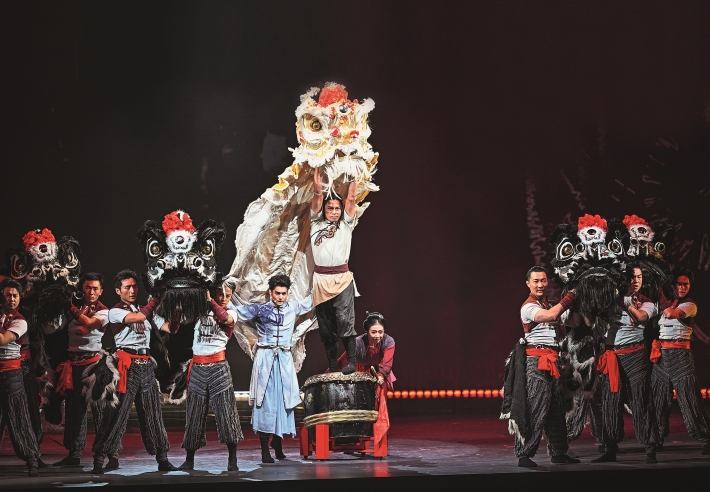
A scene from the dance drama Awakening Lion on 4 November 2025 (XINHUA)
The year 2025 marked a period of vigorous expansion for China's performing arts sector, as the industry evolved from a traditional entertainment field into a comprehensive engine of cultural consumption. According to a market briefing released on 13 January by the China Association of Performing Arts (CAPA), the sector recorded robust growth across multiple indicators, reflecting a broader transformation towards diversified formats, integrated cultural tourism models and experience-oriented consumption.
CAPA data show that in 2025, China hosted 640,400 commercial performances, up 6.58 percent year on year. Total box office revenue reached 61.655 billion yuan ($8.6 billion), marking a 6.39 percent increase, while total audience attendance climbed to 194 million, up 4.22 percent.
A key driver of this expansion was the large-scale performance segment, defined as shows with more than 5,000 attendees. The number of such events grew by 12.70 percent to reach 3,000 nationwide. These large-scale performances generated 32.448 billion yuan ($4.67 billion) in ticket sales and drew over 43 million spectators, a significant increase of 18.81 percent.
Beyond headline figures, what stands out is the industry's expanding multiplier effect. As audiences show a stronger willingness to pay for immersive experiences, large-scale performances are proving to be powerful catalysts for broader economic activity. CAPA estimates that such events generate an average consumption leverage ratio of 1:6.85. In other words, for every yuan spent on tickets, an additional 6.85 yuan is spent on transportation, accommodation, dining, tourism and retail. In 2025 alone, large-scale performances drove more than 220 billion yuan ($37.1 billion) in related consumption beyond box office revenue.
The data reflect not merely a growing entertainment market, but a structural shift. Performances are increasingly embedded within wider consumption ecosystems.
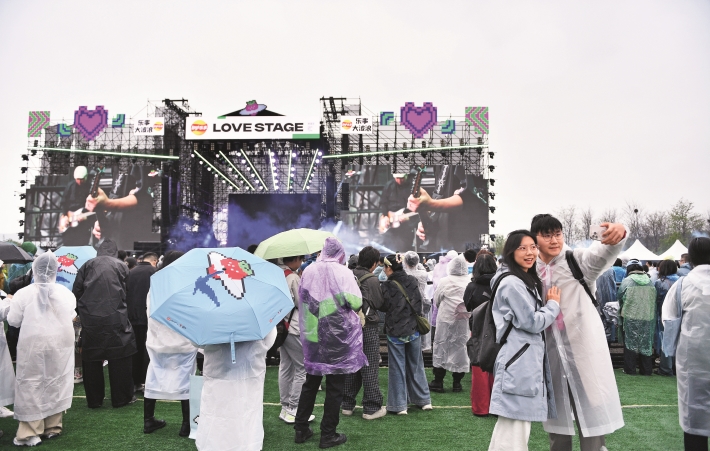
Audiences gather at Beijing Super Strawberry Music Festival on 2 May 2025 (XINHUA)
Expanding reach
Policy support and market vitality have both contributed to this expansion. Local governments have optimised venue capacity, expanded seating in stadiums and streamlined administrative procedures to unleash market potential. At the same time, deeper integration between performances and tourism has amplified audience enthusiasm.
The rise of the "ticket stub economy," where a performance ticket unlocks discounts for hotels, scenic spots, restaurants and shops, has significantly enhanced travel willingness and cross-city consumption.
Concert tours are increasingly extending beyond first-tier cities into second- and third-tier urban centres. During the summer of 2025, several concerts in regional cities sold out within minutes, signalling a more balanced nationwide distribution of performance resources.
The economic ripple effects were immediate. A sold-out concert often translated into surging hotel bookings, fully reserved high-speed rail tickets and bustling food streets late into the night. Average hotel occupancy rates during concert weekends in many regional cities exceeded 80 percent, with some surpassing 90 percent. Ride-hailing platforms, shopping malls and cultural creative stores reported sharp spikes in revenue.
Local tourism authorities moved quickly to capture the momentum, launching "concert plus travel" packages that encouraged fans to extend their stays and explore nearby scenic areas and heritage sites. The influx of young visitors also boosted social media visibility, strengthening city branding and injecting new vitality into local service industries.
Meanwhile, original stage productions also flourished. Professional theatres, small theatres and emerging performance spaces staged 438,700 shows in 2025, up 7.3 percent year on year. Market-oriented genres continued to expand. Musical theatre alone reached 19,700 performances nationwide, up 15.04 percent, generating 1.807 billion yuan ($260 million) in revenue and attracting 8.19 million attendees.
From grand stadium concerts to experimental black-box theatre, the industry is moving beyond a single-focus box office model towards a broader ecosystem defined by content innovation, cultural tourism synergy, immersive experience and digital empowerment.
Ticket power
Across the country, cities are leveraging performances as catalysts for urban renewal and tourism growth.
In Beijing's Dongcheng District, the 2025 National Drama Show Season demonstrates how curated programming can energise entire neighbourhoods. Ticket holders enjoy exclusive discounts at more than 40 hotels, bookshops and restaurants. The initiative, supported by government subsidies and merchant partnerships, extends theatre-going into a full "eat, stay, travel, shop and enjoy" consumption chain, revitalising surrounding communities.
In Nanjing, the 2025 Nanjing Arts Festival presented 35 high-quality productions and more than 10 themed events within two weeks. The festival generated 40.15 million yuan ($5.78 million) in ticket revenue and attracted around 62,000 theatre-goers. More significantly, it directly stimulated approximately 192 million yuan ($27.65 million) in cultural and tourism consumption.
Chengdu, capital of southwest China's Sichuan Province, has positioned theatres as anchors of cultural tourism integration. Ticket-linked promotions at Chengdu High-Tech Zone Grand Theatre and themed weekend programmes at Sichuan Grand Theatre encourage audiences to transform a performance into a multi-day cultural getaway.
Beyond major productions, niche formats such as seaside concerts and camping music festivals have flourished, providing short-distance travellers with distinctive destination anchors. According to industry observers, high-quality intellectual property projects are activating entire consumption chains.
These cases reveal a clear pattern. Performances are increasingly functioning as destination magnets, with the humble ticket stub serving as a golden key that unlocks extended urban consumption.
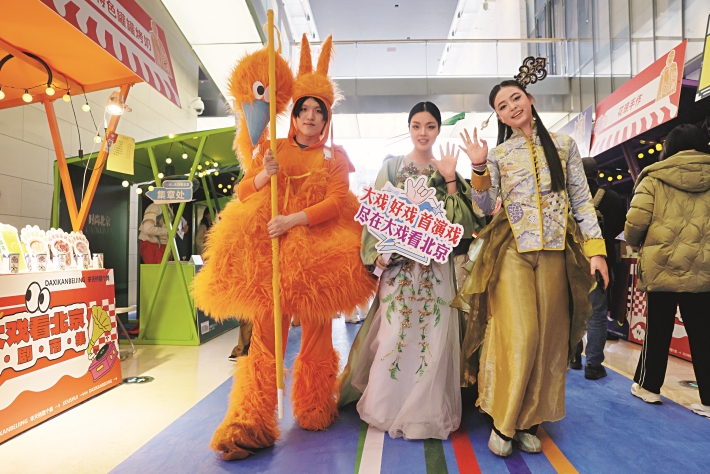
A drama market at Beijing's Tianqiao Performing Arts Centre on 15 November 2025 (CNS)
Festive spotlight
The momentum carried into the 2026 Spring Festival, traditionally one of China's most important holiday periods.
In Beijing, 274 commercial productions comprising 2,087 performances were scheduled during the holiday season. Audiences could choose from London West End musical Singin' in the Rain at Beijing Performing Arts Centre, classic Beijing People's Art Theatre drama Under the Red Banner, Peking Opera staple Suolinang at Chang'an Grand Theatre, or a festive concert by the Beijing Chinese Orchestra at Zhongshan Music Hall. Emerging performance spaces such as Fanxing Drama Village and Gulou West Theatre offered immersive productions appealing to younger audiences.
Cultural consumption extended beyond the stage. The National Centre for the Performing Arts launched Year of the Horse-themed cultural and creative products, blending artistic aesthetics with daily use. Red envelopes, decorative "fortune stickers," and other festive merchandise quickly became popular among visitors.
Leveraging its location near Beijing's historic Central Axis, Tianqiao Performing Arts Centre partnered with cafes and restaurants to offer dining discounts for ticket holders.
From 3 to 10 February, the 11th Tianqiao Xiaonian Temple Fair transformed the theatre complex into a vibrant cultural hub. Traditional operas including Beijing opera, Pingju and Hebei Bangzi were staged nightly, while public spaces hosted bustling markets featuring theatrical cultural products, handicrafts and seasonal goods.
For many young attendees dressed in hanfu, the theatre became both a cultural gathering space and a festive marketplace - a place where watching a show, shopping for theatre-themed Chinese New Year goods, and experiencing traditional customs converged seamlessly.
"As we seek to transcend the traditional notion of a theatre as merely a venue for shows, we want to build a deeper emotional connection with our audience," explained Jiang Qiong, deputy general manager of Beijing Tianqiao Performing Arts Centre. This effort to create an engaging cultural sphere where stage lights meet festive lanterns shows how performances are enriching holiday consumption and embedding themselves into the emotional fabric of urban life.
Shanghai likewise embraced the holiday surge. From early January through the Lantern Festival, 52 high-quality stage productions were scheduled across venues under the Shanghai Grand Theatre Arts Centre. These developments illustrate how performances now shape holiday traditions. Theatre visits, concert attendance and cultural fairs are becoming integral parts of urban Spring Festival experiences.
China's performance industry demonstrated that cultural vibrancy and economic dynamism can reinforce one another. As the sector continues to evolve, performances are no longer isolated artistic events. They are catalysts for urban renewal, bridges between culture and commerce, and vital components of citizens' increasingly rich and colourful cultural lives.