


The Timeless Allure of Yangzhou
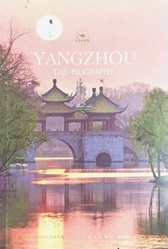
Yangzhou: The Biography
Author: Wei Minghua
Price: RMB 178
Paperback, 336 pages
Published by New Star Press
The book Yangzhou: The Biography, written by Wei Minghua, is part of the Biographies of 100 Cities Along the Silk Road series. Rather than writing a general history account of this millennia-old city, this book aims to answer one central question: What is Yangzhou's relationship with the Silk Road? This requires examining several aspects: the significant historical facts about Yangzhou in China's foreign exchanges, why Yangzhou became a renowned hub for such interaction, and the stories of ordinary people in today's Yangzhou.
Yangzhou was literally built on water, prospered and was beautified by its waterways. As one of China's famous historical and cultural cities, its 2,500-year history has nurtured a rich cultural heritage. From ancient times to the present day, Yangzhou has remained a destination sought after by literati and poets.
The author Wei Minghua, hailed as"a living history" of the city, has written dozens of books about Yangzhou. As a native cultural scholar, he chronicles this ancient city to share its stories with the world.
Beyond immersing readers in the charm of this ancient city, the book also conveys its profound history and cultural heritage. To this end, the author delved into a group of lesser-known individuals who made outstanding contributions to Yangzhou's global interactions, as well as ordinary folks whose experiences are vivid and compelling.
The volume is composed of eight chapters. Chapter One"Yangzhou People Heading for the Outside World" tells of Yangzhou natives who went in search of adventure around the world; Chapter Two"Foreigners Arriving in Yangzhou throughout History" details encounters with foreign visitors who came to the city; Chapter Three"Yangzhou, the Cultural Capital of East Asia" explains Yangzhou's cultural exchanges with Japan and the Korean Peninsula; Chapter Four"Yangzhou, City of Gastronomy in the World" comments on Yangzhou cuisine and its global influence; Chapter Five"Famous Historical Figures of Yangzhou" features historical figures past and present; Chapter Six"The Books about Yangzhou Written by Foreigners" presents Yangzhou through the eyes of foreigners; and Chapters Seven"A Portrait of Local Cultures and Customs in Yangzhou" and Chapter Eight"The New Stories of the Streets and Alleys in the Old City of Yangzhou" capture the nuances of modern-day Yangzhou.
The author pioneers a bold new approach to Yangzhou studies, challenging established narratives with original insights. For instance, in writing about the renowned figures in Chapter One, one might first think of Jianzhen, the Tang Dynasty (618-907) monk who traveled east to Japan. However, the author deliberately avoids this familiar figure, choosing instead to focus on Fajin, the disciple who followed Jianzhen across the sea to Japan. Fajin was the only monk from Yangzhou recorded in the official historical text Shoku Nihongi, an imperially-commissioned Japanese history text, and he made tremendous contributions to Sino-Japanese cultural exchange, particularly in advancing Buddhism in Japan.
Other notable figures include Ma Shi'an, a renowned physician in the Song Dynasty (960-1279) who traveled to the Korean Peninsula, marking the earliest recorded Yangzhou native to visit that region; Zang Min, the first Eastern Han Dynasty (25-220 A.D.) figure to venture west, a native in Guangling (modern-day Yangzhou's Baoying), celebrated for quelling rebellions and defending borders; and E Sen, the Chinese advisor at the Tokyo Trials between 1946 and 1948, who served as a legal expert for China at the International Military Tribunal for the Far East. Though these historical figures are not widely known, they are revived in the book to narrate their legendary ties with Yangzhou.
A city's past usually features many great heroes, whose names are recorded in the annals of history. Yet history is equally made up from the intersecting destinies of countless ordinary people.
In Chapter Five, the author writes about many interesting common folks. For example, Wang Youheng, a qin (zither) player living during the late Yuan (1206-1368) and early Ming (1368-1644) dynasties, whose artistry was profoundly impressive – infusing fiery emotion into his strings, delighting listeners with melodies of obsessive passion, ultimately reaching a state where both player and listener were enchanted; and the vocalist Xu Ziyun, who rose to fame during the late Ming Dynasty, with his reputation spreading far and wide; as well as the famous Yangzhou opera performer Jia Biyun of the late Qing and early Republic of China periods, considered as one of the"Four Great Beauties" of Peking Opera, alongside Mei Lanfang, Zhu Youfen, and Feng Zihe.
In other chapters, the author interprets and explains Yangzhou from entirely fresh perspectives. For instance, in Chapter Three, rather than rehearsing the history of exchanges between Yangzhou, Japan, and the Korean Peninsula, he writes about Yangzhou figures who influenced East Asian culture from the perspectives of philosophy, historiography, science, Xiaoxue (traditional Chinese philology), literature, and Quxue (the study of drama). And in Chapter Six, his selections of writings about Yangzhou by foreigners are also previously little-known works, offering fresh insights into the city's global image.