


Confidence, inclusiveness and innovation are key to sharing Chinese culture more widely
The 2025 Forum on International Communication of Chinese Culture concluded in Beijing on Dec. 19, gathering experts to discuss strategies for enhancing the global reach and impact of Chinese civilization under the theme of "Confidence, Inclusiveness, and Innovation."
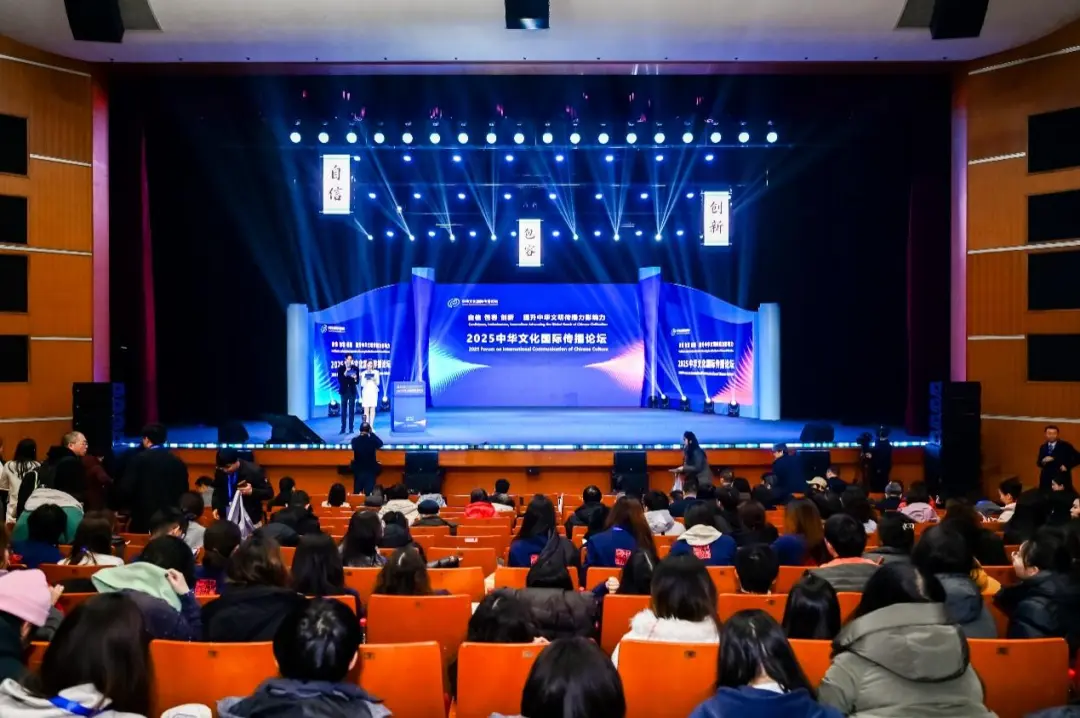
The 2025 Forum on International Communication of Chinese Culture is held in Beijing, Dec. 19, 2025. [Photo/CICG]
In his opening address, Chang Bo, president of China International Communications Group (CICG), highlighted the inherent openness of Chinese culture. "Since ancient times, Chinese civilization has been renowned for its openness and inclusiveness, embracing diverse elements with broad-mindedness," he stated. He emphasized that as China's role on the world stage grows, engaging with different civilizations through exchange and mutual learning is becoming more crucial for demonstrating this inclusive cultural vision.
Multiple policies are facilitating this exchange. China now grants either unilateral visa exemption or mutual visa-free entry to about 75 countries and 240-hour visa-free transit to citizens of 55 countries. Official data reveal a significant 48.3% year-on-year increase in visa-free foreign entries for Q3 2025, reaching 7.25 million. This expanding visa-free policy fuels global interest in traveling and shopping in China.
The fusion of culture and technology was a central focus of the forum. Chang pointed to the rising international influence of China's new cultural trio—online literature, web series, and online games. He called for continued integration, urging the application of digital technologies like AI to innovate the creation and sharing of culture. According to official statistics, by the end of June 2025, overseas readers of Chinese web novels had exceeded 350 million across more than 200 countries and regions.
Li Jingze, vice chairman of the Chinese Writers Association, elaborated on this digital success. He also noted that Chinese web literature now captures the attention of global readers. "We are embracing the new force of online literature, interacting with the world with innovative narratives," he said. The industry is evolving from exporting works to fostering cultural understanding, supported by cross-media adaptations. The Association has also established Chinese literature reader clubs in over 20 countries, hosting more than 160 reading events so far.
Looking beyond the digital realm, Wu Weiren, chief designer of China's Lunar Exploration Program and an academician of the Chinese Academy of Engineering, presented a cosmic perspective. He described space exploration as a reflection of national strength and innovation, announcing a collaboration between the Deep Space Exploration Laboratory and CICG to create an "integrated air-ground interactive cultural communication platform." This platform, inaugurated at the forum, aims to transform major technological achievements into channels for cultural dialogue. The laboratory, headquarted in Hefei of Anhui and with a division in Beijing, is co-founded by China National Space Administration, the government of Anhui Province, and University of Science and Technology of China to facilitate deep space exploration.
The forum also featured several launches, including the presentation of the "Voices from Chinese Writers to the Stars" project, and the donation of "A New-era Panorama of Rivers and Mountains," a digital artwork composed of nearly 30,000 satellite images, to the National Archives of Publications and Culture. The 2025 Report on the International Communication of Chinese Culture was also released, providing analysis and insights into current trends and future pathways.